Truly a superb lens which commands a premium price tag. I would say for the serious shooter: street photography, travel destinations and of course portraits/events this is the one for your full-frame Canon. For hard to reach places or even landscape compositions from the road-side not the one I would recommend. Yes, its an 'L' lens but there are other better fits and if you're searching for something that won't break the bank and yields suburb quality I'd place this one on the back burner.
Canon RF 24-70mm F2.8L IS USM — Landscape Photographer's Review
Category: Standard zoom, full-frame
Mount: Canon RF
Aperture: Constant f/2.8
Use case focus: Landscape photography
Overview
The RF 24-70mm f/2.8L IS USM is Canon's flagship standard zoom for mirrorless R-series bodies. While it's often marketed as an all-purpose lens for events and portraits, it also holds up well as a landscape tool — covering the wide environmental shot through to moderate telephoto compression without a lens swap. This review is written from a landscape shooter's perspective, covering sun star rendering, wide-angle usability, weight/handling on the trail, image quality, and practical use of ND filters for silky water effects.
⭐ Sun Star Clarity
For landscape work — sunrise/sunset shots with the sun in frame, or sun peeking through trees/rock formations — this is a lens people specifically shop for, and it holds up well:
- Uses a 9-blade aperture, which produces reasonably defined sun stars but not razor-sharp ones.
- Best results appear between f/11 and f/16 — stopping down further (f/22) adds diffraction softness without meaningfully improving the star shape.
- Points are rounded rather than needle-sharp, so if you're chasing the crisp 18-point stars you get from lenses with more aperture blades (or odd-numbered blade counts), this isn't the strongest performer in that specific niche.
- Flare is well controlled thanks to Canon's ASC (Air Sphere Coating) — you get clean stars without much ghosting, even with the sun partially in frame.
- No ND filter needed for the star itself. In practice, this reviewer gets clean, well-defined sun stars straight out of camera without reaching for an ND to tame the sun's intensity first — the coatings do enough of that work on their own. Save the ND filters for water effects (see below); they're not necessary just to shoot toward the sun.
Verdict: Good, not exceptional. Reliable and pleasant for landscape sunbursts at f/11-f/16, and one less filter to carry/swap in the field since it doesn't need an ND to clean up the star.
🌄 Wide-Angle Use (24mm end)
- At 24mm, distortion is minimal and very well corrected in-camera/in-software (RF lenses lean on software correction more than older EF designs) — straight horizons and architectural lines in-frame stay straight.
- Corner sharpness at f/2.8 is good, and stopping to f/8–f/11 (the typical landscape sweet spot) tightens corners up nicely edge to edge.
- Close-focus at the wide end is strong — minimum focus distance around 0.21m at 24mm is great for foreground-interest compositions (rocks, flowers, texture) paired with a big background, a classic landscape technique.
- Vignetting is present wide open but is a non-issue at typical landscape apertures (f/8+), and easily corrected in post if it appears at all.
- 24mm is wide enough for most vista shots but not ultra-wide — if you regularly shoot 16-20mm scenes (tight canyons, big-sky panoramas), you'll still want a dedicated ultra-wide alongside this lens.
Verdict: Excellent for the majority of landscape compositions — vistas, foreground/background layering, architecture. Only limiting factor is that it's not ultra-wide for the rare scene that needs it.
⚖️ Weight & Handling (On the Trail)
- Weighs approximately 900g (31.7 oz) — noticeable on a long hike, especially paired with a tripod, filter kit, and a second lens in the bag.
- Well balanced on full-frame R bodies (R5, R6, R3) — front-heavy on smaller bodies like the RP, which matters if you're hand-holding for long stretches between tripod setups.
- Zoom ring is smooth with good resistance; no zoom creep when the lens is pointed down a slope or hanging on a strap.
- Weather-sealed — a real asset for landscape work in mist, light rain, or sea spray at coastal locations.
- The 82mm front filter thread is on the larger side, which means ND and polarizer filters for this lens run pricier than smaller-thread alternatives — worth factoring in alongside the lens cost if you're building a filter kit for long exposures.
Verdict: A bit of a load for all-day hikes, but weather sealing and build quality are exactly what you want when you're out chasing golden hour in unpredictable conditions. Budget for the larger 82mm filters.
🔍 Image Quality
- Sharpness: Excellent across the zoom range, even wide open at f/2.8. Center sharpness is outstanding; corners are very good and improve further by f/4-5.6.
- Bokeh: Smooth and pleasing for a zoom, especially at 70mm f/2.8, though it can't match a dedicated 85mm or 50mm prime for background separation.
- Chromatic aberration: Very well controlled, minor fringing only in high-contrast edge cases.
- Image Stabilization: Up to 5 stops with IS alone, more with in-body IS on compatible bodies — genuinely useful for handheld video and low-light stills.
- Color rendering: Classic Canon L-series color science — warm, accurate skin tones, punchy without oversaturating.
Verdict: This is where the lens earns its price tag. Genuinely pro-grade image quality throughout the zoom range.
💧 ND Filters for Silky Water
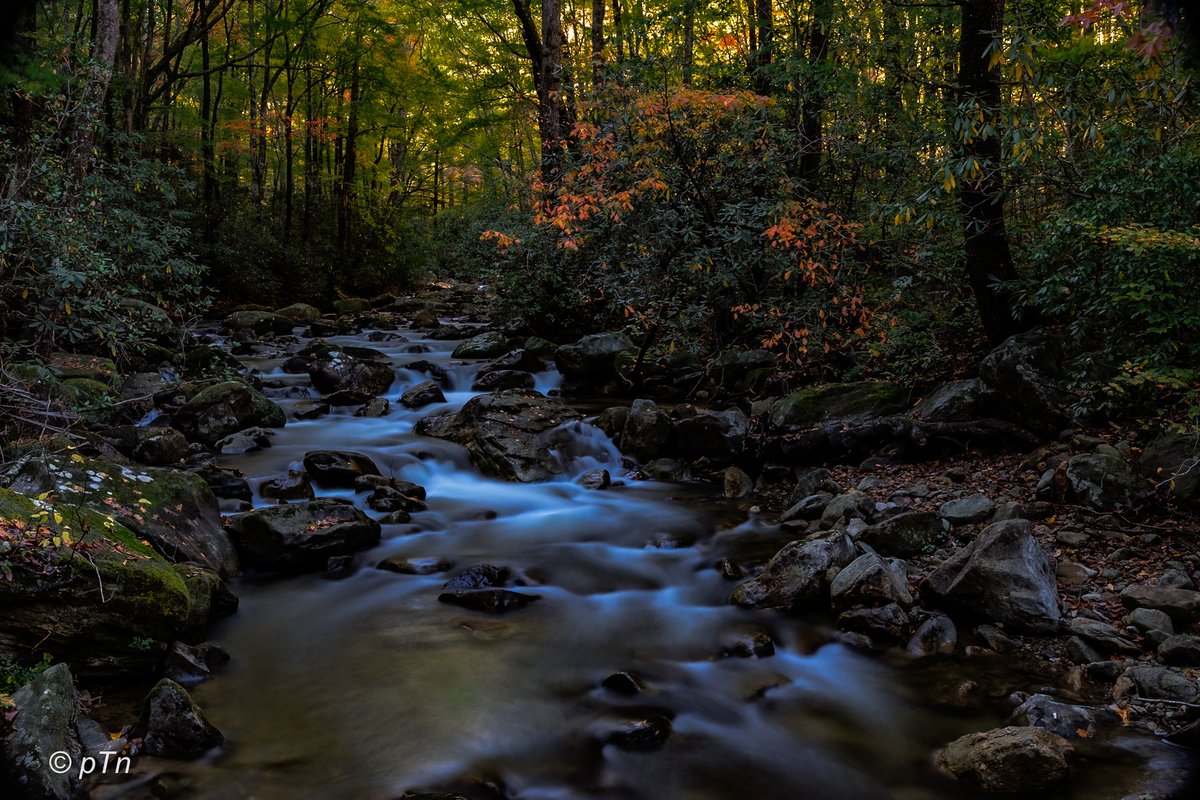
This is where the 82mm front thread and the lens's optical quality both pay off — long-exposure water shots (waterfalls, streams, coastline) are a core landscape technique, and this lens handles it well:
- Filter strength: A 6-stop ND is the practical daytime workhorse for silk-water effects — it gets shutter speeds into the 1-4 second range in normal daylight without needing to stop down so far that diffraction softens the image. Reserve a 10-stop for full midday sun or when you want much longer (30s+) exposures.
- Aperture pairing: Shoot in the f/8-f/11 range with the ND stacked on — this keeps the lens in its sharpest zone rather than pushing to f/16+ to slow the shutter, which is a common beginner mistake that trades sharpness for exposure time you could've gotten from a stronger filter instead.
- No color cast issues: Quality ND filters (Canon's own, or reputable third parties like B+W, Breakthrough, NiSi) show minimal color shift on this lens — no strong magenta or blue cast to correct in post, which isn't always true on wider or more exotic lens designs.
- Vignetting with filters: At 24mm with a thicker ND filter or a filter + polarizer stack, watch for mechanical vignetting in the corners. A slim-profile ND is worth the extra cost if you shoot wide with filters stacked.
- Focus behavior: Autofocus works fine before the ND goes on; with a strong ND (10-stop+) attached, switch to manual focus and focus first, since AF can hunt once the filter cuts that much light.
- Polarizer + ND combo: The 82mm thread makes stacking a circular polarizer + ND straightforward for waterfall/stream shots where you also want to cut glare off wet rocks — just budget for the vignetting check above.
Practical workflow for silk water: Compose and focus (or lock focus) before attaching a strong ND → attach filter → meter and adjust shutter speed → shoot at f/8-f/11 → check corners for vignetting at 24mm.
Verdict: The 82mm thread and clean optical performance make this a strong lens for ND filter work — budget for slim-profile filters if you shoot wide.
Summary Table (Landscape Use)
| Category | Rating (out of 5) | Notes |
|---|---|---|
| Sun Star Clarity | 4 | No ND needed for clean stars; f/11-f/16 sweet spot |
| Wide-Angle Use | 4.5 | Excellent distortion control, close focus for foreground/background layering |
| Weight/Handling | 4 | Noticeable on long hikes, but weather-sealed and well built |
| Image Quality | 5 | Sharp corner-to-corner by f/8, accurate color |
| ND Filter / Silk Water | 4.5 | Clean with quality filters; 82mm thread costs more, watch vignetting when stacked |
Final Take
Ha ha covered my take in the beginning, 2nd paragraph!